Welcome

Merry Meet, all. Hummingbird, here. 21-year-old eclectic Pagan and witch who works primarily in crystal, warding, and energy magicks. Asexual, with a wonderful girlfriend. I am just beginning to learn the path of Athena. Attending college with end goal of a degree in Interior Design.

This blog is a digitalized record of my life as a Pagan. It includes spells, charms, notes on the properties of various magickal items, and my own personal experiences with my practice. Sometimes I post multiple times a day, sometimes it's once a month.

All are welcome here. Please, make yourself at home, and let me know if I can help you with anything. )0(

Thursday

June 11th, 2015

I meant to make this post yesterday, but I couldn't for the life of me remember what I wanted to talk about until like 11:00 last night, so obviously that didn't happen.

Purchase from Silver Bonsai
I've been interested in the concept of threshold magick for quite some time, but it was brought back to my attention earlier this week while skimming through Scott Cunningham's The Magical Household. He has a section dedicated solely to the role of the threshold, and what it can mean to the magickal practitioner.

There is an old belief that spirits cannot enter a place unless they are invited, and this is the real point of the threshold as a magickal construction. When one casts a circle, one is establishing a temporary threshold, and as such must then carefully invite in those spirits or other powers which one is working with. The physical doorway acts similarly; doubtless, you've heard stories about vampires or other entities which cannot enter a home until they are asked.

What separates a house's threshold from, say, the doorway into Super Target? I was reminded of a quote from The Dresden Files: Summer Knight. (For those who haven't read the books, a summary; Harry Dresden works as a wizard in downtown Chicago, helping the CPD with supernatural murder cases, and etc. Quasi-Pagan, film noir, and urban fantasy style. Kind of great. I definitely recommend it.) The quote goes like this:

I stepped across her threshold. Something tugged at me as I did, an intangible, invisible energy. It slowed me down a little, and I had to make an effort to push through it. That's what a threshold is like. One like it surrounds every home, a field of energy that keeps out unwanted magical forces. Some places have more of a threshold than others. My apartment for example didn't have much of a threshold - it's a bachelor pad, and whatever domestic energy is responsible for such things doesn't seem to settle down as well in rental spaces and lone dwellings. Murphy's house had a heavy field surrounding it; it had history. It was a home, not just a place to live. 
-Jim Butcher, Summer Knight, ch. 7

Personally, I disagree with the sentiment that rented spaces do not have strong thresholds, but really believe that it comes down to the last statement - in order to have a strong threshold, a place needs to be a home, not just a place where one stays, transiently. This is, in my opinion, the key difference between the thresholds of public and private spaces. In a store, a museum, or etc., the theory is that anyone is welcome, and as such, very little boundary exists. That being said, a case could be made for places like expensive stores, fine restaurants, or etc. - that feeling of unease one gets upon entering may well be a result of crossing a threshold where one is not wholly welcome. Even though the space is technically public, it still caters to a specific clientele and is really only trying to invite them in. 

 Regardless of the semantics of public boundaries, in a home, we consciously and unconsciously project a desire for privacy and exclusivity, and this carries over to the energy of the place. If one were renting a place longer than the short term (say, more than a couple months), I see no reason why the same kind of barriers and protections couldn't be readily established.

As a young adult living at home, I recognize that our house has a main threshold, of course, but other zones have them, too. In open areas, like the living room, the boundary is shaky and not very defined. However, my own room has a much stronger threshold. I keep a very clear division between my space and everyone else's, and even if the rest of my family doesn't know anything about magick, they sure know that this space is mine, and mine alone.
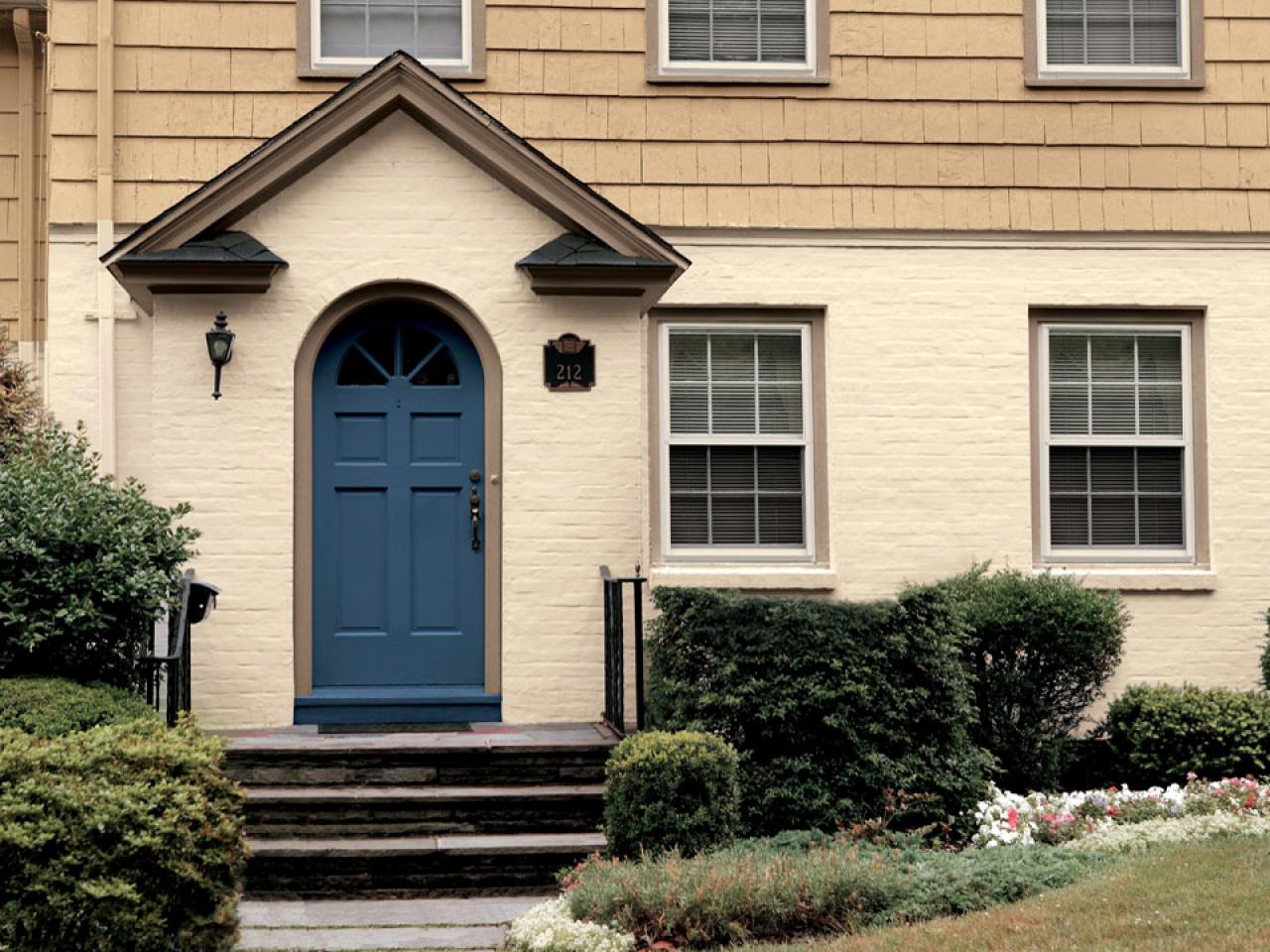
If your concern is that your boundaries may not be strong enough, and you would like to lend more power to the sanctity of your living space, consider some of these ideas.

  • Establishing wards is one way to get the ball rolling, by deliberately marking out one's territory on the astral and calling powers to defend it. 
  • Redecorate. Get rid of clutter and objects you have no use for or connection to. Try to have the bulk of your furnishings be ones which you, personally, enjoy. 
  • Cleanse. It's one thing to leave the energies of, say, a family heirloom intact, but if you're buying anything, especially secondhand, and all the more so if you plan to use it for magick, it's always a good idea to erase the energy imprint of old owners and replace it with your own. 
  • Care for your home. Whether it's a city studio apartment or a fixer-upper in the country, be proud of your place. 
The next suggestions for threshold enhancements come paraphrased from Cunningham's book
  • Hanging a gourd outside on both sides of a door prevents negativity from entering
  • Chalk a circle on the door to stop ghosts from entering (do not use if you like ghosts)
  • Dill and garlic both have protective qualities; hanging them near the door will stop ill-disposed people from entering
  • A bag of salt or bells hung on the doorknob will stop negative spirits (see also: these amulets)
  • A blue door repels evil, as does leaving two crossed needles under the mat
  • Ferns, lilies, marigolds, and juniper can all be grown around the door in beds or pots for added protective benefits
  • There's no end to what can be done with keys. Any number of protective spells have been devised employing them

Monday

June 8th, 2015

So I pieced together this little photomanipulation for Destiny tonight.


She picked out the pictures, and then I edited them together. I think it came out neat! She's going to use a series of these for iPad backgrounds.

Saturday

Garage Sales

I hadn't really wanted to spend any cash today, but my mom saw a garage sale on the way back from looking at new stove hoods, and apparently my youngest brother had a great desire to acquire material objects, so I went with. Naturally, I ended up spending several dollars more than I would have liked, but I think ultimately it was worth it. I got a really cute set of Japanese sake (酒 - rice wine) cups with a matching pitcher patterned with goldfish (I don't drink, so I'll probably end up using them for tea or something), and two glass jars.


I'd just been thinking the other day that it would be good to have some more jars to store herbs and the like, and now I have some. 

June 6th, 2015

This morning, I read one of the books I bought with Destiny the other day.

Title: The Rune Poem
Translated and Annotated by: Jim Paul
©1996

Paul has a doctorate in medieval literature, and his ongoing translation and re-translation of this ancient poem into English makes for an interesting look at one of the oldest connections to the Futhark runes we have.

As Paul explains, this particular rune poem is from the Germanic tribes of pre-Christian Europe (similar poems also existed in Iceland and Nordic countries). The oldest written copies have all been lost; currently, the only historical record of the original poem comes from a transcription by a Christian monk, which had in turn been transcribed by a series of other monks before him, like a scholarly game of telephone. As a result, some of the original Pagan passages have more Christian overtones. If you have read Beowulf, you've probably encountered this same problem. That being said, thousands of years later (the poem is believed to have first been recorded circa 1000 CE, and had likely existed for centuries before that), the poem still retains both its simple, fluid verse and reference to the magic and daily life of the Anglo-Saxons.

The book begins with a brief introduction to the history and magic of the runes. Then, beautifully illuminated pages show both the rune and the accompanying three lines of verse with Paul's annotations to explain their significance. It's hard to see in my room's poor lighting, but all the colors are metallic, and the surrounding borders draw clear inspiration from art contemporary to the poem.

This is not probably not a book for those already well-versed in runic readings, origins, or meanings. It's really more of an introductory text, almost bearing resemblance to the alphabet books one might read to children. However, if, like me, you've never read the original rune poetry before and aren't necessarily looking for a more expansive book, then this could be one to add to the collection. Also, as I pointed out, it might not be bad for younger individuals interested in runes, either. The large illustrations are attractive, and the language is very straightforward throughout the text.

Overall, it's not a particularly academic text, but I knew it wouldn't be the first time I picked it up. I just wanted a nice translation of the rune poem to read, and Jim Paul's book certainly delivered.

Friday

June 5th, 2015

So I finally finished reading my fairy encyclopedia! I don't know why it took me so long to get through, but regardless, here are my thoughts on it.

Title: The Element Encyclopedia of Fairies 
Author: Lucy Cooper
©2014

Calling itself the "ultimate A-Z of fairies, pixies, and other fantastical creatures", I wasn't sure how I would feel about this particular encyclopedia of folklore when I picked it up at Barnes & Noble a couple of months ago; I'd read part of another mythology text in the Element Encyclopedia series and had not been impressed. However - this very quickly won me over.

It is clear from the get-go that the author has done her research. Cooper's writing is authoritative and in-depth. While this is not a how-to for someone interested in actively working with fairies, it also is not condescending in any way towards those who believe in them, either. When one considers writing style, the book is made both engaging and accessible while being very informative. The cross-referencing of different names for the same fairy(ies) is not perfect, but is very good on the whole, and her crediting of and reference to other compilers of folklore is one of the better ones I've run across outside of academic texts.

All that being said, it's really the information that the reader cares about, and this text has a lot of it. There are multiple inserts throughout the book (about one every 150 or 200 pages) which discuss topics not specific to one type of fairy. These include:
  • What are fairies?
  • Where is Fairyland?
  • Connecting with fairies
  • Elementals and flower fairies
  • Fairies in literature and legend
Then, of course, there is the actual A-Z itself, which talks about fairies and similar spirits from around the world. All of this info is drawn from documented myths, and Cooper even goes on to tell the reader which books they can look to so as to read the original legends. In many cases, she provides abridged versions of the stories, which are interesting reads in and of themselves.

She also includes important people, particularly writers, relevant to the world of fairy tales in the encyclopedia. I found this useful because though I might read classics like Andrew Lang's The Blue Fairy Book and etcetera, I do not always know much about the authors, where they are coming from and what their biases are, or where they were getting the folktales that they then published in their collections. I appreciated Cooper providing that cursory bit of perspective.

The Cottingley fairies, which Cooper discusses at length
And yes, I did say "spirits from around the world". The book is probably Eurocentric, it's true. Many of the stories come from Ireland and the UK. This is not inherently a bad thing, of course. I myself have always loved English flower fairies, and the Celtic Tuatha de Danann. But, other cultures have fairies and fairy-like spirits as well, and they often get ignored in texts like this. Cooper's book, however, actually gave more information than in many of her peers' works.

Although there is very little coverage of South or Central American lore, she talks about spirits from many different North American native tribes (Navajo, Ojibwe, Algonquin, Sioux, Inuit, etc.), Aboriginal Australians, African peoples (primarily focusing on Nigerian Yoruba lore), and the Maori people. There is also discussion of Chinese, Japanese, Korean, and Siberian fairies.

Additionally, I feel I should point out that Cooper does not take deities and call them "fairies" for the sake of bulking up her content. Of the few that are in the book - Brighid comes to mind - she explains the reason for their inclusion; in Brighid's case, it is because she was a Tuatha de Danann before she was worshipped as a goddess.

Finally, Cooper makes note of where some of these spirits have appeared in pop culture, which I always find to be fun and interesting trivia. For instance, Harry Potter fans might like to know that Dobbys, Cornish pixies, and Padfoots all appeared in local English legends well before JK Rowling wrote them into her delightful series.

Tl;dr: If you are looking for a guide to working with fairies, skip this one. If you want to read about the stories and histories of fairies, this is a great place to start.

~Fairy folk are in old oaks~

Thursday

June 4th, 2015

It's been a quiet day of crafting for me. I made a birthday gift for my mom, and then decided I could finish up an older project (by "older", I mean "abandoned for two or three years"). I made three of these little knitted bunnies ages ago and started on the green one, but then lost motivation halfway through. Later it occurred to me that the colors I had picked at random were actually elemental colors. 
I went ahead and finished the green one today, and now I have them situated around my room according to their corresponding direction.

Green, of course, is earth and North, yellow is air and East, red is fire and South, and blue is water and West. 

If anyone else is interested in making their own elemental bunnies (they also make great herb satchets, cat toys, etc.), the pattern is available for free download here.

Wednesday

June 3rd, 2015


It's been a fun couple of days! Destiny came over today after I got off work, and we got to sit and chill for a while. She wanted to see my book collection, so we pored over those, as well as my collection of Pagan and/or crystal jewelry. I need to organize that!

She also showed me a couple of the things her grandmother brought back with her from her recent trip to England. Apparently, Destiny had requested she bring back something for me as well, and today she gave me the cutest little pewter trilithon figure (on the right side, in the picture). Destiny also gave me a small stone (on the left), which she said was also from Stonehenge. That's so cool! I got a book from the library last summer about stones from sacred sites, so I'll have to see if I can find it again and check out its Stonehenge entry.

Tuesday

June 2nd, 2015

Destiny and I had a fun afternoon today! Her grandma drove us over to a local Half-Priced Books (which I hadn't even realized we had), and we spent a couple hours totally geeking out over books. I got a couple of things - as it would happen, their metaphysical section was in fact better-developed than most Borders'.

I got a little book about Nordic runes, and then we each got a copy of a volume recording Celtic myths and legends. I also got the next book in the Dresden Files series, because why not? Book reviews to follow for the first two, as soon as I get my act together and read something new instead of just rereading YA books (but hey, the Kane Chronicles have me all psyched over Egyptian mythology, so there's that).

Afterwards, we drove over to a nearby metaphysics shop - yet another place I had no idea existed! We had a bit of a time limit, so we only got to stay long enough to wander a little and get a feel for the place, but it was absolutely lovely and had a huge selection of crystals available, so it won me over immediately. The place was called Quest Books, or something to that effect. Apparently, they also have a labyrinth down the street one can go walk.

In short, if I keep finding brilliant places like this, my bank account is going to be in trouble.

Monday

Tangerine Quartz

Tangerine Quartz


Physical Characteristics: Crystal specimens may range from pale to very dark orange, and appear translucent. 

In Nature: Tangerine Quartz forms in the presence of Hematite and water. The Iron in the Hematite oxidizes, covering the crystal in a thin coat of rust.

Chemical Composition: SiO2

Mohs Scale Hardness: 7 (high)

Can be Found: Worldwide, though most mining occurs in Brazil

Healing Properties*: Mentally, the stone boosts self-esteem and brings a sense of empowerment. It may be helpful in recovering from shock or trauma, or can be employed as a more general pick-me-up. Like many orange crystals, it engenders feelings of happiness and positivity.

Magickal Properties: In addition to Quartz's general properties, this stone is especially notable as an emotional healer and for sparking creativity. Use Tangerine Quartz to foster relationships and to release self-deprecating or limiting patterns of thought. It may also be useful as a tool of manifestation, especially when one's desires correspond to one of the stone's other properties (e.g. manifesting a completed project, new relationship, etc.) 

Chakra Association: Second (Sacral) and Third (Solar Plexus)

Element: Fire

Energy: Projective

Planetary Association: Sun

*Magickal healing should never take the place of seeing a doctor and following any recommended prescriptions, actions, or other advice. Magick works best in tandem with physical efforts, anyway, so don't skimp on those check-ups!

June 1st, 2015

Well, I hadn't been anticipating going to the zoo yesterday, but that's what we did, and thus my other plans got rather derailed. It's alright, though. I always enjoy getting to see the animals.
~~~~~
This afternoon, I would like to take some time to discuss my notebooks, and what I use them for in my Craft. In the picture, one can see two Alice in Wonderland notebooks, spiral-bound. There is not much which outwardly distinguishes either one; in fact, they are entirely innocuous, the sort of thing that any young person might own. 


Almost any Pagan living with (or even frequently visited by) unsupportive family finds themselves subject to trying to hide their practice. I myself accomplish this by keeping my altar in my closet, and making sure that those things I have visibly around the house are common enough to not raise any eyebrows. Granted, I have it better than many, and my solutions may not be suitable for those whose housemates are especially invasive of privacy, but that's a topic for a different post.

The point I am slowly working my way toward is that while my BoS stays in my closet, with its triple goddess and stag head imagery, I can carry either of these notebooks around anywhere and no one is any the wiser. 
The blue book on the left hand side is the one which I just filled up on Saturday, after four years of sporadic use. Started in August of 2011(about a month before I made this blog, actually), it tracks things like:
  • Psychic experiences
  • Pagan events or festivals I attend
  • Feedback on rituals
  • Specific notes on spells and their results
  • Research (including first drafts of all of my crystal posts)
  • Tarot spreads and notes on accuracy
  • Contact information for Pagan stores, artists, etc.
  • Other miscellaneous Craft-related info
In short, it is a record of my life as a young adult Pagan. I wish I would have thought to start one when I first became interested in my religion, but I was never very good at keeping a journal growing up. The second notebook only has one entry so far, but it will serve the same purpose.


Spreads like this allow me to clip in business cards, highlight relevent information, doodle altar layouts, design sigils, and etcetera. I found over time that writing in pen is the best option, as pencil has an unfortunate tendency to fade. Also, I do record the dates and times of all of my entires. I have considered adding in notable astrological info, but ultimately never bothered.

Other ideas I would like to try sometime include adding stenciled headers, marking a page with a specific oil or perfume, or including bits of herbs left over from a spell or ritual.

Something that I've had a great deal of success with in other applications is writing in code, particularly when one is concerned about somebody reading what you've written. I like Futhark runes myself, as I memorized them in my childhood and therefore have an easy time reading and writing them. Also, I figure that most people are not interested enough in my writing to look up the translation and decode it. That being said, one could always simply invent one's own alphabet if one were particularly worried.

Whether you already keep a journal or are interested in starting one, I hope that this little explanation of my own inspires your work, or at least was mildly interesting. I'm always looking for inspiration myself, so by all means share your own journal if you have one!