Welcome

Merry Meet, all. Hummingbird, here. 21-year-old eclectic Pagan and witch who works primarily in crystal, warding, and energy magicks. Asexual, with a wonderful girlfriend. I am just beginning to learn the path of Athena. Attending college with end goal of a degree in Interior Design.

This blog is a digitalized record of my life as a Pagan. It includes spells, charms, notes on the properties of various magickal items, and my own personal experiences with my practice. Sometimes I post multiple times a day, sometimes it's once a month.

All are welcome here. Please, make yourself at home, and let me know if I can help you with anything. )0(
Showing posts with label spirit. Show all posts

Saturday

February 25th, 2017

I cannot believe I am only just now finishing my research on the stones I acquired at Fairy Fest over six months ago, but to be fair to myself, I've been busy with school and we had a bunch of family crises, so finding the time and energy to do my research has been a challenge.

Anyhow, the last Fairy Fest stone I have to share information on is Andara Crystal Glass; I was gifted a chunk of it by an energy worker at the festival, and it's a variety of crystal with a rather contentious, questionable story behind it. The long and short of it is, Andara Crystal Glass is synthetic, not natural (more on that below), and as such, many unscrupulous vendors will hype up the crystal while providing little factual information on it, and then charge an outrageous price for the stuff.

My stance on synthetic crystals is firmly positive - I enjoy Opalite, Goldstone, and etc. both aesthetically and magickally - but it is important to know before you buy that this is not some incredibly rare and hard-to-come-by mineral. Make sure the price tag reflects that.

~~~~~

Andara Crystal Glass

Physical Characteristics: This variety of glass can be found in virtually any color, and in varying opacities.

In Nature: Andara Crystal Glass is not found in nature. It is cullet glass leftover from other glass-making processes, and often found in the slag variety. Slag glass is its own subsection of streaky, opaque glass, often used decoratively in light fixtures, but the main takeaway is that this is not a naturally-occurring crystal. 

According to one story, a California earthquake in the 1960's uncovered a buried deposit of some of this glass, and that is what brought it to the attention of the metaphysical community. This makes sense in passing, as California is highly earthquake-prone, but I was unable to find confirmation of this from a reliable source, so take the story with a grain of salt.

Chemical Composition: Silica-based, varies by method of production

Mohs Scale Hardness: 5.5 - 6.5 (middle)

Can be Found:
Theoretically, wherever glass (especially slag glass) is made

Healing Properties*: None noted besides the benefits listed below

Magickal Properties: The information available on Andara Crystal Glass is mixed, some of it being believable, and some of it going straight off the metaphysical deep end. That being said, Andara Crystals are generally associated with energy work. They can be imbued with Reiki energy, and likewise are used for clearing the chakras and raising one's personal vibration.

Other uses include raising one's conscious awareness, and channeling information. They are stones of positive thought, and for connecting to the energy of the universe and/or deity. Andara Crystal Glass is best charged with light, sunlight being the most effective.

Individual colors have their own meanings which can be investigated further, though keep a critical eye when reading through information provided by vendors trying to sell their product.

Chakra Association: Crown (Seventh) Chakra

Element: Akasha

Energy: Receptive

Planetary Association: Uranus, Moon

*Magickal healing should never take the place of seeing a doctor and following any recommended prescriptions, actions, or other advice. Magick works best in tandem with physical efforts, anyway, so don't skimp on those check-ups!

Friday

July 15th, 2016

Ammolite/Opalized Ammonite


Physical Characteristics: Opalized Ammonites, known as Ammolites, are fossils wherein the animal's shell has been replaced by Aragonite, along with impurities like Calcite and Pyrite. This gives them a characteristic iridescence, usually in shades of red and green.

In Nature: Ammanoid cephalopods first appeared in the Devonian period, over 400 million years ago, going extinct at the end of the Cretaceous period. They are classified by the gas chambers in their spiral shells. After their deaths, the ammanoids fossilized into Ammonites, some of which became Ammolites.

Chemical Composition: CaCO3 with impurities

Mohs Scale Hardness: 3.5 - 5 (low to middle)

Can be Found: Most are found on the eastern slopes of the North American Rocky Mountains.

Healing Properties*: Ammolite is considered psychologically beneficial, strengthening one's will to live and offering energy and stamina. It has also been employed to ease childbirth, and to stabilize blood pressure.

Magickal Properties: Ammolite has been prized around the world as a symbol of many deities, especially those with curved horns. Pliny the Elder called them hammonis cornu, "the horns of Ammon", from the Egyptian god Amun, a ram-headed god. In one legend from the Niitsitapi (Blackfoot) Nation, the Ammolite, with its form like a bison, first taught a young woman how to call the bison to be hunted. In Ethiopia, the stone was said to grant deep meditative states and prophetic dreams; today, it remains a common practice to use the spiral shape of the stone to draw one down a coiled astral path on spiritual journeys of all types, including communion with deity and past-life regression.

Ammolites and Ammonites may also be the fabled "dragonstones" or "draconites" described in some texts as protecting against poison, venomous animals, or one's enemies. In terms of sympathetic magick, the Ammolite was once home to a living creature. Therefore, it can be used in magick relating to the home, including protection, selling a house, and moving. 

The stones are protective and radiate Earth energies. As such, Ammolite is a source of grounding and of survival. Its horn shape hearkens back to the cornucopia, and so it is likewise a stone of prosperity. Ammolite can carry one into the subconscious as well as the astral - use it to transform the emotions, especially as they apply to repression, trauma, and problematic familial patterns.

Chakra Association: Particularly the First (Root) chakra, although it works with them all

Element: Akasha

Energy: Receptive

Planetary Association: Jupiter

*Magickal healing should never take the place of seeing a doctor and following any recommended prescriptions, actions, or other advice. Magick works best in tandem with physical efforts, anyway, so don't skimp on those check-ups!

Sunday

April 24th, 2016

Had a busy but good day today, part of which involved heading over to the Gaia House for a few hours, to enjoy a reception for the artists who have work in the Pagan art exhibit which has been on display there this month. We enjoyed coffee, lemonade, and an assortment of little snacks, and generally were able just to hang out and chat.


My painting, with description, that I've had hanging up.


A collection of paintings, all by one lovely individual.


A series of nature photography, all by another artist.


Triple Goddess painting by one of our more Norse-inclined practitioners.


These two photos, by SIPA director Tara, have a rather interesting story. They were taken on vacation while visiting a haunted potter's field of unnamed soldiers. Apparently, just after these were taken (on actual film, not digitally), it started to storm, so obviously there was not enough sunlight to cause lens flare (the white patches on the photos are just glare on the glossy paper; the orange is actually present). Also, these were the only two photos on the whole strip of film with these strange colors, so it couldn't have been water damage. As such, Tara's thought is that she caught some spirits on camera. The one in the top photo actually even looks humanoid.


Me with my painting.


Hand-made grimoire.


Set of runes.


And just for good measure, this is the spiral garden I helped build last spring. As you can see, the plants are pretty well-established now. The sage and kale really took over, so that's pretty much what's growing at this point.

Wednesday

August 5th, 2015

Spirit Quartz (aka Cactus Quartz)


Physical Characteristics: Most Spirit Quartz is a variety of Amethyst, and so this post will focus on this type. However, some varieties may appear as Citrine, Smoky Quartz, or White Quartz, and these will have additional properties.

In Nature: Spirit Quartz occurs when hundreds of tiny points grow off the sides of a central, larger Quartz point. As stated above, most specimens are a subtype of Amethyst, and as such appear as a gentle purple or pink. Any specimen which appears to be iridescent in some ways is likely Aura Quartz, which has been artificially treated. See my post about Ruby Aura Quartz for more information.

Chemical Composition: SiO2

Mohs Scale Hardness: 7 (high)

Can be Found: The Magaliesberg Mountain region of South Africa is the only area known to produce Spirit Quartz.

Healing Properties*: Bringing emotional healing on all levels, this crystal may be used by the passing and the bereaved alike to come to peace. It likewise heals skin disorders or blistering and etcetera as a result of an allergic reaction. The stone can also help to manage Obsessive Compulsive Disorder or abuse-related stress disorders. 

Magickal Properties: In the words of the vendor who sold me my piece, this is an incredible social stone which promotes harmony in any group, be it family, friends, or peers. In the home, it welcomes guests, newborns, adopted or foster children, and even pets. Merging step-families might want to bring in a piece of Spirit Quartz to ease any initial tensions; the crystal may also help to reconcile quarreling siblings. 
As it promotes group consciousness and cooperation, a coven or study group could find it beneficial in building team unity. Use it to heighten psychic perception and dreaming, or to facilitate out of body experiences. It is also useful for cleansing the aura or a room, dispelling negative entities or energies.
This crystal is specifically one of non-duality and balance on a spectrum. Amethyst Spirit Quartz is about beginnings and endings; through this one sees its balancing properties, as well as its capacity to seek karmic justice in traumatic situations.
Especially useful in artistic endeavors, it stimulates creativity and imagination. Regardless of how it is used, the numerous small points amplify energy and send it out in all directions.

Chakra Association: Seventh (Crown) chakra, but may be used to heal any of them

Element: Spirit/Akasha

Energy: Receptive

Planetary Association: Any

*Magickal healing should never take the place of seeing a doctor and following any recommended prescriptions, actions, or other advice. Magick works best in tandem with physical efforts, anyway, so don't skimp on those check-ups!

Friday

June 5th, 2015

So I finally finished reading my fairy encyclopedia! I don't know why it took me so long to get through, but regardless, here are my thoughts on it.

Title: The Element Encyclopedia of Fairies 
Author: Lucy Cooper
©2014

Calling itself the "ultimate A-Z of fairies, pixies, and other fantastical creatures", I wasn't sure how I would feel about this particular encyclopedia of folklore when I picked it up at Barnes & Noble a couple of months ago; I'd read part of another mythology text in the Element Encyclopedia series and had not been impressed. However - this very quickly won me over.

It is clear from the get-go that the author has done her research. Cooper's writing is authoritative and in-depth. While this is not a how-to for someone interested in actively working with fairies, it also is not condescending in any way towards those who believe in them, either. When one considers writing style, the book is made both engaging and accessible while being very informative. The cross-referencing of different names for the same fairy(ies) is not perfect, but is very good on the whole, and her crediting of and reference to other compilers of folklore is one of the better ones I've run across outside of academic texts.

All that being said, it's really the information that the reader cares about, and this text has a lot of it. There are multiple inserts throughout the book (about one every 150 or 200 pages) which discuss topics not specific to one type of fairy. These include:
  • What are fairies?
  • Where is Fairyland?
  • Connecting with fairies
  • Elementals and flower fairies
  • Fairies in literature and legend
Then, of course, there is the actual A-Z itself, which talks about fairies and similar spirits from around the world. All of this info is drawn from documented myths, and Cooper even goes on to tell the reader which books they can look to so as to read the original legends. In many cases, she provides abridged versions of the stories, which are interesting reads in and of themselves.

She also includes important people, particularly writers, relevant to the world of fairy tales in the encyclopedia. I found this useful because though I might read classics like Andrew Lang's The Blue Fairy Book and etcetera, I do not always know much about the authors, where they are coming from and what their biases are, or where they were getting the folktales that they then published in their collections. I appreciated Cooper providing that cursory bit of perspective.

The Cottingley fairies, which Cooper discusses at length
And yes, I did say "spirits from around the world". The book is probably Eurocentric, it's true. Many of the stories come from Ireland and the UK. This is not inherently a bad thing, of course. I myself have always loved English flower fairies, and the Celtic Tuatha de Danann. But, other cultures have fairies and fairy-like spirits as well, and they often get ignored in texts like this. Cooper's book, however, actually gave more information than in many of her peers' works.

Although there is very little coverage of South or Central American lore, she talks about spirits from many different North American native tribes (Navajo, Ojibwe, Algonquin, Sioux, Inuit, etc.), Aboriginal Australians, African peoples (primarily focusing on Nigerian Yoruba lore), and the Maori people. There is also discussion of Chinese, Japanese, Korean, and Siberian fairies.

Additionally, I feel I should point out that Cooper does not take deities and call them "fairies" for the sake of bulking up her content. Of the few that are in the book - Brighid comes to mind - she explains the reason for their inclusion; in Brighid's case, it is because she was a Tuatha de Danann before she was worshipped as a goddess.

Finally, Cooper makes note of where some of these spirits have appeared in pop culture, which I always find to be fun and interesting trivia. For instance, Harry Potter fans might like to know that Dobbys, Cornish pixies, and Padfoots all appeared in local English legends well before JK Rowling wrote them into her delightful series.

Tl;dr: If you are looking for a guide to working with fairies, skip this one. If you want to read about the stories and histories of fairies, this is a great place to start.

~Fairy folk are in old oaks~

Wednesday

July 16th, 2014

I decided I'd round out my Japan posts with photos of all the lucky charms (omamori) I bought from different shrines and temples. For the sake of scale, all of these are between one and three inches long.

From Itsukushima:


A general "good fortune" talisman, embroidered with the island deer.


A talisman for good luck in academics, taking exams, etc.

From Kinkakuji:


A "traffic safety" amulet, which I'm assuming extends likewise to safety during travel.

From Kiyomizudera:


A squishy little talisman portraying the god of business success.


A dragon talisman for good fortune.

From Jishu:


A talisman for improving "the luck in love of one's zodiac sign". I'm a Pisces.

From Meiji:


I was so worried that I'd lost this one because I couldn't find it the other day, but when I got my keychain holding all of these out to take pictures, there it was! This amulet promotes oneness of the mind and body.


The writing on this carved wood reads "kodama", which is the Japanese word for "tree spirit" (similar to the European dryad). These spirits of the forest are generally benign, unless their tree is attacked, in which case they may curse the person who cut it. According to the Meiji shrine website, these wooden bells are made from the wood of sacred trees which have finished guarding the shrine precinct and allow for the oneness of human spirit and nature.


And then there's this: my little desktop shrine for academic excellence.

All of these are definitely coming to college with me.

Monday

December 23rd, 2013

It is bitterly cold outside - I had trouble getting the car started after work! Yikes! Yule is past, but if you're bundled up indoors and looking for a project, here's a great one to put together this holiday season:


Yule Seed Amulets

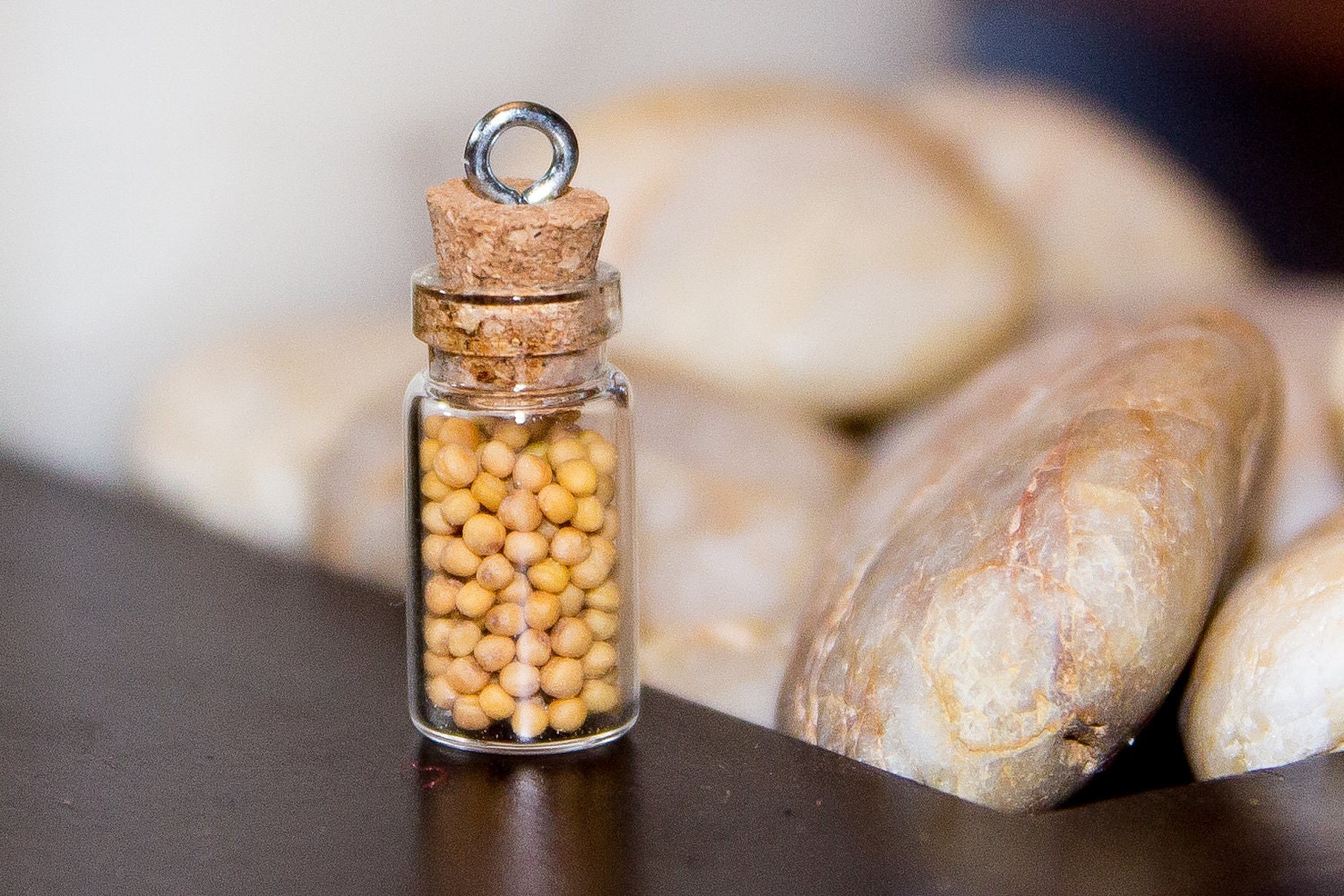
The legend goes much like this: malevolent spirits are just that - malevolent. And on the solstices, like Samhain, the veil separating the Otherworld from ours is much thinner than its usual. These Astral nasties may choose to come bother we mortals with a string of bad luck. Fortunately for us, lesser spirits of this variety have a few consistent weaknesses. For one, they abhor salt. For another, they tend to be a bit OCD. By mixing salt and protective herbs in a small jar, any spirit of ill intent passing by it will be forced to sit and count the jar's contents, keeping them from making mischief until they leave at sun-up.
Making yourself one of these amulets is a fun, easy way to keep your home clear of negativity - moreover, the kids will get a kick out of putting them together, too. Once finished, hang the completed jar on doors, set on the porch, or hide in other creative places around the home. They also make great gifts.

Supplies:
  • Glass jar of desired size
  • Tightly fitting lid for the jar
  • Yarn, ribbon, twine, or thread
  • Salt
  • Enough protective herbs to mostly fill the jar (examples include...)
    • Anise
    • Basil
    • Bayleaf
    • Belladonna
    • Black pepper
    • Chamomile
    • Chives
    • Cinnamon
    • Clove
    • Comfrey
    • Fennel
    • Garlic
    • Ginger
    • Lavender
    • Lime
    • Mint
    • Nutmeg
    • Willow
  • Other decorations (optional)

To Make:
Pour a layer of salt into the bottom of the jar. Then add herbs until it is full.
Seeds are the best option, although in the case of cinnamon, ginger, and other like spices, a ground powder may be better. Whole or crumbled leaves can also be used as desired. Just remember that the goal is to give our less pleasant visitors something to count, so definitely include at least one ingredient that is small in size. The herbs listed above are just ideas - you only need to use one variety, and may certainly employ something not on my list. Including layers or mixtures of different herbs might make the amulet prettier. Even glitter can be added - this is an especially good option for a jar going in a child's room. Once you have the contents to your liking, screw on the lid tightly and if it is meant to hang on, above, or next to a door tie on a piece of yarn or ribbon. Other decorations may be added as desired - a small pentacle charm, for example, or other carving of a protective symbol. Sigils of protection can also be drawn or painted right onto the glass.


This larger jar might get set among the flowerpots or next to the stoop.

Saturday

Totoro Part Two

I realized today that I never posted the pictures of the Totoro I crocheted. I'm sure you've all been waiting with bated breath, so here he is...


Totoro from the front.


And from the side.
He's so cute! And I have him sitting on my nightstand with my dream sachet where he can be my own little guardian nature spirit.

Wednesday

March 6th, 2013

Winter Storm Saturn hit us yesterday, snowing about 9", and closing school. I nearly had a heart attack when my mom woke me up at 5:00 yesterday morning, but it was nice to get to sleep in. After finishing my homework, I spent something like 10 hours crocheting a little Totoro plushie (see the picture) - he's really cute! Totoro is a nature spirit from Miyazaki's animated film, My Neighbor Totoro; he's pretty fantastic. I'll have to put up pictures later though, as I ran out of time to take one this morning. In other news, my AP Environmental Science class is going to the zoo tomorrow, which should be a lot of fun. What exciting things have you done recently to celebrate nature?

February 13th, 2013

I got an Ammonite shell while on a field trip at the aquarium the other day, and, as per the usual, I am going to post my research on it here. Fun, huh?
Ammonite

Physical Characteristics: Ammonite is the fossilized shell of a prehistoric animal, characterized by a spiral shape. The Ammonite is named after the Egyptian god Ammon, as the god was depicted with curling rams' horns, and the Ammonite resembles these. They have also been called "draconites" (linked to dragons) and "snake stones".

In Nature: In the Devonian period (about 400 million years ago), these were aquatic creatures found throughout the world's ocean. When the animals died, their shells fell to the sea floor, and over millions of years were turned into fossils. Different varieties can be as small as an inch to as large as almost 7 feet in diameter.

Chemical Composition: Variable

Mohs Scale Hardness: 6 - 6.5 (middle)

Can be Found: England, United States, Canada, Madagascar, Alberta

Healing Properties*: Ammonites are not connected with any one particular disease or part of the body; instead, they can be used for general good health. They can assist in childbirth, and may alleviate depression. The "stone" helps repair the body's aura and natural energy centers - it turns negative or blocked energy into positive energy that flows smoothly.

Magickal Properties: Associated with the ram, Ammonites are sacred in many cultures; in Ethiopia, they were used to aid prophetic dreaming. They were also employed to reach a deep meditative state. Ammonite helps one find one's way in the "spiral dance" of life, and can be useful to those wishing to perform past-life regression. These fossils radiate positive earth energy and draw prosperity. Use Ammonite to let go of karmic debts and harmful thought patterns. It stimulates one's instincts and builds personal power. These fossils are representative of time and eternity; they can be worn as protective amulets and may increase life span.

Chakra Association: Ammonite is most associated with the First (or Root) chakra, and may be used to activate Kundalini energies.

Element: Akasha (Spirit)

Energy: Receptive

Planetary Association: None noted

*Magickal healing should never take the place of seeing a doctor and following any recommended prescriptions, actions, or other advice. Magick works best in tandem with physical efforts, anyway, so don't skimp on those check-ups!

Tuesday

December 25th, 2012

Merry Christmas to any Christians I happen to have viewing my blog today. I hope that you get as much joy celebrating your "son" god as I get from celebrating my sun god. :)

For Yule/Christmas, I got a couple of fabulous gifts - The Witches Datebook 2013 was from a sweet woman who works at my school. From my parents, I got a really pretty faerie calendar that includes already printed in it all of the Pagan holidays, full moons, eclipses, etc., and from Santa, I got Encyclopedia of Spirits, by Judika Illes, which I've been wanting for several months. I started reading it today, and it is so good, I can't put it down!

Sunday

April 15th, 2012

First, a personal update: last night marked the final performance of my high school's spring musical, so I should be home a great deal more now to write up my blog posts. Huzzah!
~~~~~~~~~~
In other news, I shall continue my monthly saga of the Celtic tree months. Today begins the month of Willow, called Saille (Sahl-yeh) by the Celts. The Willow belongs to the genus Salix (from Latin sal-, meaning near, and -lis, meaning water), which includes approximately 400 species of deciduous trees and shrubs. They grow in moist soil, are found primarily in the northern hemisphere, and are extremely cross fertile, meaning that both natural and cultivated hybrids are common. The most popular example of such is the Weeping Willow, which is a cross between the Peking Willow from China and the White Willow from Europe. All Willows have sap heavily charged with salicylic acid (similar to the active ingredient in aspirin, and used in many acne treatments), and the roots are typically stoloniferous, or runner-producing. Indeed, the roots of the willow are extremely tough, and in some varieties will happily grow even from parts of the plant well above the ground. With regard to flowers, the willow produces catkins that are both male and female, and are generally purple or orange.
The Willow is prevalent in mythology and legend from across the globe. In Japan, the tree is associated with ghosts, and the Japanese believe that wherever one grows, a ghost may appear. Similarly, the Willow is frequently planted in or near European graveyards, and in China, the branches of the Willow are employed during the Qingming, or "tomb-sweeping", festival. At this time, the god of the underworld allows the dead to return temporarily, and as these spirits may not always be welcome, the Willow is said to ward them off. Some Christian churches in northern Europe use Willow branches instead of palms on Palm Sunday, and in Wicca, the Willow is mentioned in the Rede as being one of the Nine Sacred Woods, and is used to guide the dead to the Summerland. It is also common in rites of fertility. In ancient Greece, for example, willow leaves were placed in the beds of infertile women, which was believed to call mystical snakes from the underworld to cure them. In later times, the association was switched, and willow was used to drive snakes away. Today, a pregnant woman may place an article of clothing under a willow tree, and if that night even a single leaf falls on the cloth, the woman will be granted an easy childbirth by the spirit of the Willow. The tree is also sacred to poets, as the wind whistling through the branches is said to inspire the mind.
Because of its connection to the dead, Willow is commonly associated with the element Spirit. Burn Willow to help ease the spirit of the deceased, and use it to bring new energy to the elderly or sick. Since the tree deals with the cycles of life, change, and will, it can be employed in magick dealing with those things. It is also associated with the element Water, and is an excellent wood to use in making a water-dowsing rod. Further, it is tied to feminine energy, and can be employed in love spells, or spells to aid in womanly matters. According to tradition, willow bark is to be used to bind sacred and/or magickal objects together. A besom, for instance, will traditionally have an Ash handle and Birch twigs for the broom, bound with Willow. It is also a popular wood in carving wands and talismans.
Willow bark is edible, and is frequently made into teas to reduce rheumatism, indigestion, and whooping cough. To make a willow decoction, useful for soothing inflamed tonsils or gums, soak three teaspoons of willow bark in cold water for two to five hours, before boiling. Then strain, and drink a glass daily.